
Towing Capacity & Calculators: How Much Can You Tow Safely?

When I first started working in vehicle recovery and towing over eight years ago, I noticed a dangerous pattern. Drivers would walk into a dealership, see a “Max Towing Capacity” sticker of 10,000 lbs, and assume they could hitch up a 10,000-lb trailer and drive across the country. In my experience, that is the quickest way to end up on the side of the road with a blown transmission or, worse, a jackknifed rig.

Understanding towing isn’t about reading a single number on a brochure; it’s about understanding the physics of a moving weight. Over the years, I’ve seen everything from overloaded SUVs with smoking brakes to trucks where the front wheels were barely touching the ground because of improper weight distribution. My goal is to take the guesswork out of the process so you can stay safe and keep your vehicle in one piece.

Table of Contents

What Is Towing Capacity (And What It Is NOT)

In my eight years of hands-on towing, I’ve learned that “towing capacity” is a highly controlled lab number. Manufacturers calculate this limit under “ideal conditions”—flat roads, sea-level oxygen, no wind, and usually just a driver in the cab. It represents the maximum weight a vehicle can pull, but it does not account for the wear and tear or the “white-knuckle” stress of driving at that limit in the real world.

Capacity is a ceiling, not a target. Just because your heart can beat at 200 beats per minute doesn’t mean you should run at that pace all day. Similarly, towing at your vehicle’s absolute limit puts immense strain on the engine, cooling system, and frame. I always tell my clients that “capacity” is the point where the vehicle is legally and mechanically tested to survive, but “safe towing” happens well below that number.

Common Misconceptions About Towing Capacity

  • “The engine is strong enough, so it’s fine”: Towing is about stopping and steering, not just pulling. A big engine doesn’t mean your brakes can handle the heat.
  • “Upgrading the hitch increases capacity”: Adding a Class IV hitch to a small SUV doesn’t change the vehicle’s frame or axle strength.
  • “Empty trailers don’t count”: Even an empty trailer adds “drag” and wind resistance, which affects your vehicle’s performance.
  • “The number on the bumper is the law”: The bumper rating is often lower than the actual vehicle tow rating; always check the manual.

Payload vs Towing Capacity (The Mistake Most Drivers Make)

This is the area where I see the most frequent mistakes. People often focus so hard on the trailer’s weight that they forget about the weight inside the truck. Payload is everything you carry: passengers, the dog, the cooler, and the heavy toolbox in the bed. Towing capacity is what you pull behind you. The “hidden” danger is that these two numbers are inextricably linked by something called “Tongue Weight.”

Tongue weight is the downward pressure the trailer applies to the hitch. Usually, this is about 10–15% of the trailer’s total weight. That pressure counts as payload. If you have a truck with a 1,500-lb payload capacity and your trailer puts 800 lbs on the hitch, you only have 700 lbs left for people and gear. I’ve had to recover many vehicles that were under their tow limit but massively over their payload limit, leading to broken leaf springs and failed tires.

Comparison: Payload vs. Towing Capacity

FeaturePayload CapacityTowing Capacity
DefinitionTotal weight the vehicle can carry (inside/on top).Total weight the vehicle can pull (behind).
IncludesPassengers, cargo, fuel, and trailer tongue weight.The trailer and everything inside the trailer.
Limiting FactorSuspension, tires, and axle strength.Engine, transmission, cooling, and braking systems.
The “Overlap”Tongue weight reduces available payload.Does not directly affect payload, unless improperly loaded.

Gross Vehicle Weight Ratings Explained Simply

Weight ratings can feel like alphabet soup: GVWR, GCWR, GAWR. However, in the field, these are the numbers that determine if I’m pulling you out of a ditch or if you’re driving home safely. The GVWR (Gross Vehicle Weight Rating) is the maximum your vehicle can weigh when fully loaded. The GCWR (Gross Combined Weight Rating) is the maximum weight of the vehicle plus the trailer combined.

I’ve seen drivers ignore these numbers because “the truck feels fine.” The problem is that these limits aren’t just about the engine; they are about the frame’s ability to resist bending and the brakes’ ability to dissipate heat. If you exceed the GAWR (Gross Axle Weight Rating), you risk snapping an axle or blowing a bearing at 65 mph. These numbers matter more than horsepower because they are the mechanical “fail points” of your vehicle.

Key Weight Ratings You Need to Know

  • GVWR: The max weight of the truck alone (including fuel/people).
  • GCWR: The max total weight of the truck + trailer together.
  • GAWR: The max weight a single axle (front or rear) can carry.
  • Curb Weight: What the vehicle weighs empty on the showroom floor.
  • Dry Weight: What a trailer weighs without water, propane, or gear.

Why “Max Towing Capacity” Is Misleading

In my experience, the word “Max” in marketing is more about sales than safety. When a manufacturer says a truck can tow 12,000 lbs, they often mean a specific base model with no options, a specific rear-axle ratio, and a driver who weighs 150 lbs. As soon as you add a luxury trim package (which adds weight) or a family of four, that “Max” number drops significantly.

Professional towers rarely, if ever, tow at 100% of the rated capacity. We use what I call the “80% Rule.” If your truck is rated for 10,000 lbs, you should aim to tow no more than 8,000 lbs. This creates a safety margin for unexpected situations like a sudden gust of wind, a steep mountain grade, or an emergency stop. Towing at the limit leaves you zero room for error, and in the US, road conditions are rarely perfect enough to justify that risk.

The Benefits of the 20–25% Safety Margin

  • Reduced Heat: Keeps the transmission and oil temperatures in a safe range.
  • Better Braking: Gives your brakes more “bite” during emergency stops.
  • Structural Longevity: Prevents the frame from flexing and the suspension from sagging.
  • Driver Comfort: Reduces the “tail wagging the dog” feeling where the trailer pushes the truck around.

Real-World Factors That Reduce Towing Capacity

A vehicle’s towing capacity is a dynamic number that changes every time you add a passenger or change your route. One of the most overlooked factors is altitude. For every 1,000 feet of elevation, a naturally aspirated engine loses about 3–4% of its power. If you’re towing through the Rockies, your “capacity” is effectively much lower than it was at the coast.

Then there is the “stuff” factor. Over the years, I’ve weighed rigs that were thousands of pounds over what the owner thought they weighed. Why? Because they forgot to account for the 50 gallons of water in the RV tank, the extra batteries, and the firewood in the bed of the truck. Everything you add to the vehicle or the trailer subtracts from your remaining “safe” capacity.

Checklist of Capacity Reducers

FactorImpact on Capacity
PassengersEvery person subtracts directly from Payload and GCWR.
High AltitudeReduces engine power; makes pulling heavy loads harder.
Steep GradesIncreases heat and strain on transmission and brakes.
Full Water TanksWater weighs 8.3 lbs per gallon; a full tank can add 400+ lbs.
Vehicle AgeWorn suspension and older cooling systems shouldn’t be pushed to “max.”

How Towing Calculators Work

Towing calculators are the best tool a driver can use to move from “guessing” to “knowing.” A good calculator takes the static numbers from your door jamb sticker—GVWR, GCWR, and Payload—and asks you for the real-world variables, such as passenger weight and cargo. It then performs the subtraction that most people forget to do manually.

The logic behind these calculators is to find the “Lowest Common Denominator.” It compares your GCWR against your GVWR and your hitch rating. The calculator doesn’t just look for the biggest number; it looks for the weakest link. If your hitch is rated for 5,000 lbs but your truck is rated for 7,000 lbs, a reliable calculator will tell you that you are limited to 5,000 lbs. It removes human emotion and “wishful thinking” from the equation.

Step-by-Step Calculator Logic

  • Input Vehicle Specs: Enter GVWR, GCWR, and Curb Weight.
  • Subtract “Dead Weight”: Enter the weight of all passengers and gear in the truck.
  • Calculate Available Payload: The tool determines how much “room” is left for tongue weight.
  • Analyze Trailer Weight: Enter the trailer’s GVWR (not its dry weight).
  • Identify the Limit: The tool flags which rating you are closest to hitting first.

Why Towing Calculators Prevent Expensive Damage

I’ve spent a large portion of my career towing trucks with “blown out” internals to the repair shop. When you exceed your capacity, the first thing to go is usually the transmission. It begins to hunt for gears, creating friction and heat that literally cooks the transmission fluid. A $20,000 towing job can turn into a $6,000 repair bill very quickly because someone didn’t want to use a calculator.

Calculators also protect your brakes and suspension. Overloading puts “stress cracks” in leaf springs and can cause brake rotors to warp or glaze over. Beyond mechanical damage, there is the insurance aspect. If you are involved in an accident and it is proven you were towing over your vehicle’s rated capacity, your insurance company may deny your claim. A calculator is as much a financial tool as it is a safety tool.

Real Damage Caused by Overloading

  • Transmission Slippage: Burned clutches from excessive heat and weight.
  • Brake Fade: The terrifying moment when your brakes get too hot and stop working.
  • Blown Rear Tires: Overloading the rear axle leads to sidewall failure.
  • Frame Stress: Permanent bending or cracking of the vehicle’s chassis.

SUV vs Truck Towing Capacity (What Experience Shows)

Many modern SUVs are marketed as “tow-ready,” and while they are capable, they handle weight very differently than a truck. The main difference is the wheelbase. Trucks generally have a longer wheelbase, which provides a more stable “anchor” for the trailer. In my experience, SUVs are much more prone to “trailer sway,” where the trailer begins to dictate the movement of the vehicle.

Another major difference is the suspension. SUVs are designed for a comfortable, car-like ride, meaning they have “softer” springs. When you put a heavy trailer on an SUV, the rear end often sags, which lifts the front wheels and reduces your ability to steer. Trucks are built with stiffer, progressive-rate springs designed specifically to handle downward pressure.

Comparison: SUV vs. Pickup Truck Towing

FeatureSUV TowingTruck Towing
StabilityHigher center of gravity; shorter wheelbase.Lower center of gravity; longer wheelbase.
PayloadUsually lower due to heavy interior and seats.Usually higher; designed for heavy bed loads.
ComfortBetter for passengers, but “squishy” when towing.Stiff ride when empty, but levels out under load.
VisibilityLimited rear visibility without mirror extensions.Often comes with dedicated towing mirrors.

Common Towing Capacity Mistakes I’ve Seen in 8 Years

After nearly a decade in the field, I can tell you that most accidents aren’t caused by a lack of power; they are caused by a lack of preparation. One of the most frequent comments I hear is, “I’m only going a few miles, so it doesn’t matter if I’m a little over.” Physics doesn’t care about the distance. A trailer can sway and flip just as easily at two miles as it can at 200.

Another common mistake is trusting the “Dry Weight” listed on a trailer’s sticker. That weight doesn’t include the propane tanks, the batteries, or the water in the heater. In reality, your trailer probably weighs 500 to 1,000 lbs more than the “Dry Weight” the moment you drive it off the lot. Ignoring this gap is how people accidentally exceed their GCWR.

Real-World Mistakes & “Famous Last Words”


      • “It pulls it just fine”: Pulling is the easy part. Can you stop in an emergency?

      • “I’ve got a weight-distribution hitch, so I’m good”: These hitches help with leveling, but they do not increase your vehicle’s weight limits.

      • “The engine isn’t even straining”: Diesel engines are great at hiding the fact that you are overloading your tires and axles.

      • “I just filled the water tank”: Suddenly adding 400 lbs to the back of a trailer can drastically change your tongue weight and stability.

    When You Should NOT Tow (Even If Numbers Say You Can)

    There are times when the calculator says “Yes,” but common sense says “No.” I have seen many experienced drivers pull over and wait because the conditions simply weren’t right. High winds are the primary enemy of towing. A large travel trailer acts like a giant sail; in a 30 mph crosswind, even a heavy-duty truck can be pushed out of its lane.

    You should also avoid towing if your vehicle has underlying maintenance issues. If your brakes are at 30% life or your tires are five years old, towing will push them to the breaking point. Finally, consider the terrain. If your route involves a 7% downgrade for ten miles and you aren’t 100% confident in your trailer brake controller, it is better to find an alternative route or downsize your load.

    The “Red Light” Checklist (Stop if these apply):


        • High Crosswinds: Anything over 20–25 mph for high-profile trailers.

        • Worn Tires: Any signs of dry rot or low tread on the truck or trailer.

        • Inoperative Trailer Brakes: Never tow a heavy load using only the truck’s brakes.

        • Extreme Heat: If ambient temps are over 100°F, your cooling system is already at its limit.

      How to Tow Safely Without Pushing Limits

      Safety is a mindset, not just a set of numbers. The best towers I know are the ones who are constantly checking their gear. Before every trip, I perform a “walk-around.” I check the hitch pin, the safety chains (crossed like an ‘X’), the electrical plug, and the tire pressures. Safety starts in the driveway, not on the highway.

      Using a towing calculator every time you change your load is the best way to maintain this mindset. It keeps you honest about how much gear you are actually bringing. Remember: the goal isn’t to see how much you can tow; it’s to see how much you can tow comfortably. If you aren’t white-knuckling the steering wheel, you’re doing it right.

      Step-by-Step Safe Towing Checklist

          • Run the Numbers: Use a calculator with your actual cargo weight.

          • Check Tongue Weight: Ensure it’s 10–15% of the total trailer weight.
          • Inspect Your Hitch: Ensure all bolts are torqued and the ball is the correct size.
          • Test Trailer Brakes: Use the manual override on your controller to feel them grab.
          • Adjust Mirrors: Ensure you can see the rear corners of your trailer.
          • Plan Your Route: Avoid steep grades or tight city turns if possible.

        Conclusion

        Towing is one of the most useful things you can do with a vehicle, whether you’re moving a boat to the lake or taking your family on a cross-country RV trip. But it’s a responsibility that requires respect for the machine and the laws of physics. Don’t let marketing “Max” numbers lure you into a dangerous situation.
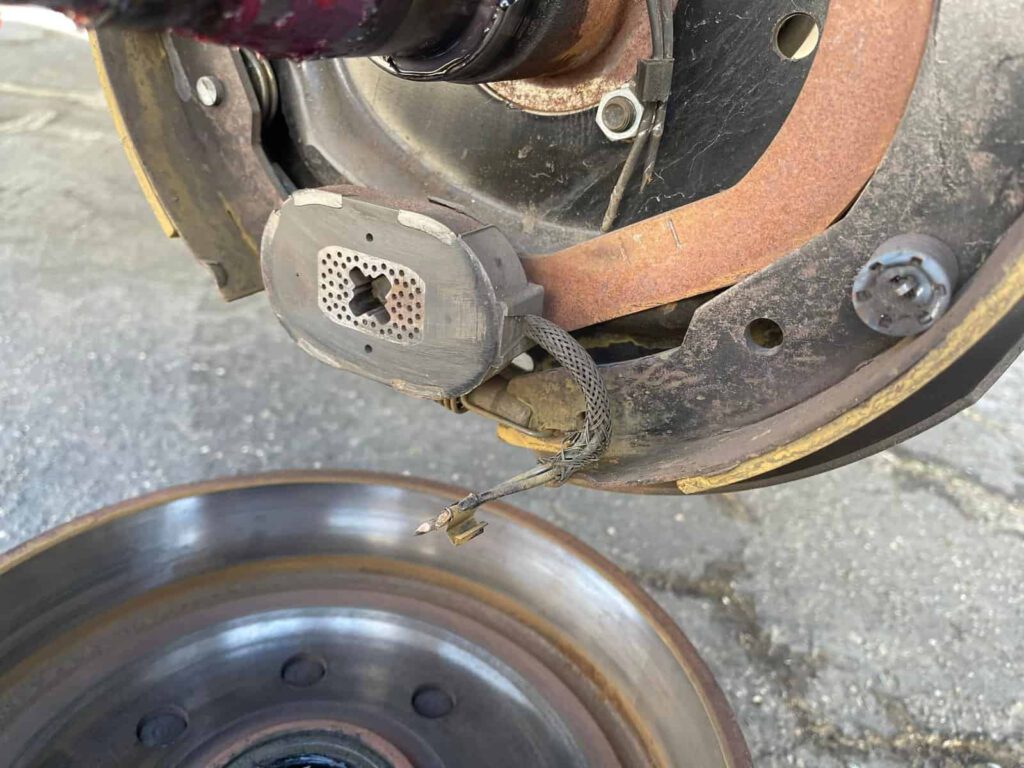
        Towing safety

        Use the tools available to you, stay within your safety margins, and always prioritize the safety of your passengers and others on the road.

        About the Author: Engr. Zeb

        I’m Engr. Zeb, and I’ve spent the last 8+ years on the front lines of the towing and vehicle-safety industry across the United States. My perspective doesn’t come from reading brochures—it comes from years of hands-on work in local towing, long-distance recovery, and specialized vehicle transport.

        I’ve seen firsthand what happens when the math doesn’t add up on the highway, and I’ve made it my mission to help drivers avoid those costly, often dangerous mistakes. My goal is to bridge the gap between complex engineering specs and the reality of sitting behind the wheel. I focus on providing practical, honest guidance and cost transparency to ensure that every time you hitch up, you have the confidence to get where you’re going safely.

        Scroll to Top