
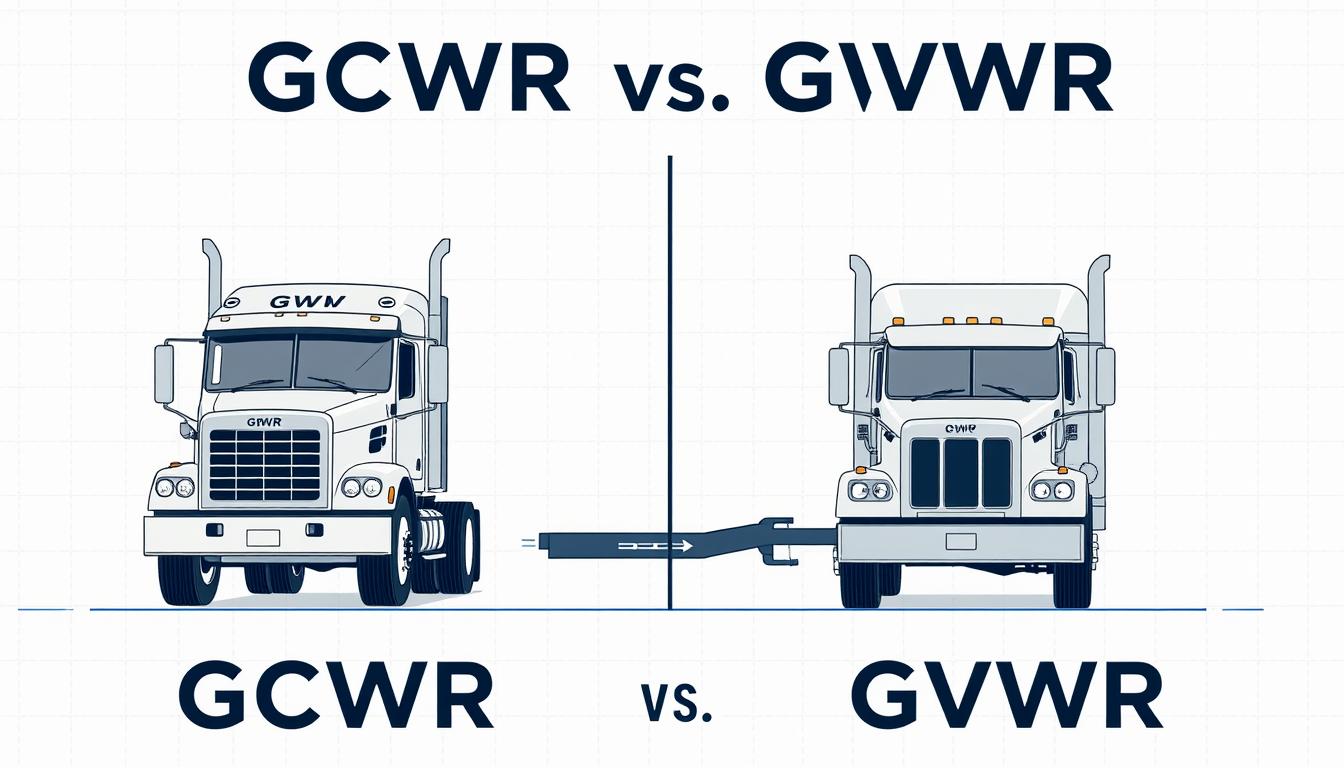
Understanding the distinction between Gross Vehicle Weight Rating (GVWR) and Gross Combined Weight Rating (GCWR) is crucial for ensuring vehicle safety and compliance. GVWR refers to the total weight of a truck, including its payload, while GCWR encompasses the combined weight of the truck, its payload, and any towed trailer.
Safe towing operations depend on comprehending these weight ratings, which impact not only vehicle safety but also legal compliance and operational capabilities. Exceeding these ratings can lead to mechanical failures, accidents, and legal consequences, making it essential for drivers and fleet managers to understand their vehicle’s weight limitations.
Use our Free GVWR vs GAWR Calculator to understand the load limits on your vehicle’s axles and ensure safe towing.
Key Takeaways
-
- Understanding GVWR and GCWR is essential for safe towing operations.
-
- These weight ratings impact vehicle safety, legal compliance, and operational capabilities.
-
- Exceeding GVWR and GCWR can lead to mechanical failures and accidents.
-
- Drivers and fleet managers must comprehend their vehicle’s weight limitations.
-
- Proper understanding of weight ratings ensures the structural integrity of the vehicle.
Understanding Vehicle Weight Ratings
To operate vehicles safely, it’s essential to comprehend their weight ratings. Vehicle weight ratings are a set of specifications that define the maximum weight a vehicle can safely carry or tow.
To determine if your vehicle can safely handle your trailer, try our GVWR vs GCWR Calculator for quick and accurate results.
Why Weight Ratings Matter for Safety
Weight ratings are critical for safety as they help prevent overloading, which can lead to accidents. Overloading can cause tire failure, brake failure, and loss of control, especially when towing trailers.
Key Terminology in Vehicle Weight Specifications
Understanding key terms is vital. These include GVWR (Gross Vehicle Weight Rating), GCWR (Gross Combined Weight Rating), GAWR (Gross Axle Weight Rating), Curb Weight, and Payload Capacity. Each plays a significant role in determining a vehicle’s safe operating capacity.
| Term | Description |
|---|---|
| GVWR | Maximum total weight of a vehicle, including passengers, cargo, and fuel. |
| GCWR | Maximum combined weight of a tow vehicle and its trailer. |
| GAWR | Maximum weight supported by a single axle. |
| Curb Weight | Weight of the vehicle with standard equipment and fluids, excluding passengers and cargo. |
What is GVWR?
The Gross Vehicle Weight Rating (GVWR) is a vital metric that influences vehicle safety and performance. GVWR represents the maximum weight a vehicle is designed to carry, including its own weight, passengers, cargo, and any additional equipment or trailers.
Understanding GVWR is essential for ensuring that a vehicle operates within safe limits. It is a critical specification that determines a vehicle’s safe operating capacity.
Definition and Components of GVWR
GVWR is defined as the maximum allowable weight of a vehicle, encompassing its chassis, body, engine, fuel, passengers, cargo, and any additional accessories or modifications. The components that contribute to GVWR include the vehicle’s curb weight, payload capacity, and the weight distribution across its axles, specifically the front and rear axle ratings.
GVWR is not simply the sum of the axle ratings; it’s a complex calculation that considers various factors, including the vehicle’s structural integrity, braking capability, and overall safety features.
How GVWR is Determined by Manufacturers
Manufacturers determine GVWR through comprehensive engineering analysis and rigorous testing. This process involves assessing the vehicle’s design, materials, and performance under various conditions to establish a safe maximum weight limit.
Factors such as braking performance, vehicle stability, and handling characteristics are critical in determining GVWR. Manufacturers consider complex safety standards related to braking, stability, and handling.
-
- Manufacturers consider complex safety standards related to braking, stability, and handling.
-
- The process involves extensive testing under real-world conditions to validate the vehicle’s capacity.
-
- GVWR is influenced by the vehicle’s chassis, axle ratings, and overall structural integrity.
What is GCWR?
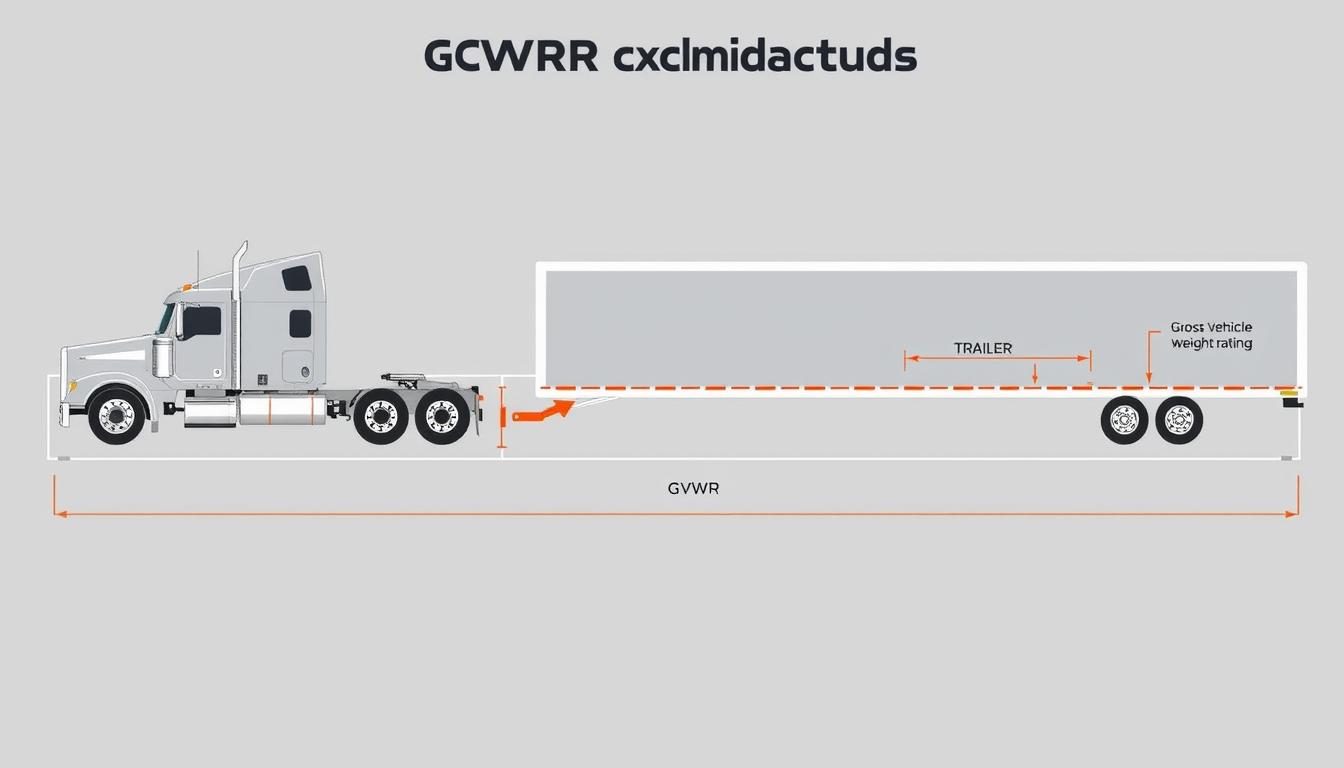
GCWR is a vital specification for determining the maximum weight a vehicle can tow safely. It encompasses the total weight of the towing vehicle, the trailer, and all cargo.
Definition and Components of GCWR
The Gross Combined Weight Rating is defined by the chassis manufacturers based on rigorous testing protocols developed by SAE International. It includes the weight of the vehicle, trailer, cargo, and passengers, providing a comprehensive measure of towing capacity.
-
- GCWR is established through rigorous testing that evaluates a vehicle’s ability to start, stop, and maneuver when fully loaded and towing a trailer.
-
- These tests assess the vehicle’s braking capability, cooling system performance, transmission durability, and frame stress under maximum load.
How GCWR is Calculated and Established
Manufacturers calculate GCWR by conducting a series of strict tests in accordance with SAE International test protocols. These tests measure the vehicle’s performance under various conditions, including steep grades and high ambient temperatures, to determine the maximum safe towing capacity in GCWR pounds.
Once established, the GCWR becomes a critical specification for consumers to select the appropriate towing vehicle for their specific trailer and cargo needs, ensuring safe towing practices for truck trailer combinations.
GCWR vs GVWR: Key Differences
To ensure safe and legal towing, it’s essential to comprehend the differences between GCWR and GVWR. These two ratings are fundamental to understanding vehicle weight limits and capacities.
Weight Measurement Comparisons
GVWR refers to the maximum weight of a single vehicle, including its payload, while GCWR considers the total weight of the vehicle, trailer, and payload combined.
When Each Rating Applies
GVWR applies to single vehicles, whether they’re towing or not. In contrast, GCWR becomes the key rating when a trailer is attached, superseding GVWR as the maximum weight limit for the entire rig. For commercial operations, these ratings have significant legal implications, particularly regarding CDL requirements.
Understanding when to apply each rating is crucial for safe towing practices and compliance with regulations.
Related Weight Ratings and Calculations
Understanding the various weight ratings associated with trucks and trailers is crucial for safe towing operations. Besides GVWR and GCWR, other critical ratings ensure that a vehicle is loaded and operated within safe limits.
Gross Axle Weight Rating (GAWR)
The Gross Axle Weight Rating (GAWR) is the maximum weight an axle can support, including the weight of the axle itself, wheels, and cargo. Exceeding GAWR can lead to axle failure, compromising vehicle safety.
Curb Weight and Payload Capacity
Curb weight refers to the weight of the vehicle without passengers or cargo. Payload capacity is the maximum weight of cargo the vehicle can carry, including passengers. Understanding these ratings helps in determining the appropriate load for a vehicle.
How These Ratings Work Together
All vehicle weight ratings are interconnected, ensuring safe operation under various loading conditions. For instance, when calculating safe loads, one must consider how GVWR, GAWR, curb weight, and payload capacity interact. For vehicles that tow, the relationship between GVWR and GCWR determines the maximum trailer weight that can be safely towed.
| Weight Rating | Description | Importance |
|---|---|---|
| GVWR | Gross Vehicle Weight Rating | Maximum weight of the vehicle including cargo and passengers |
| GCWR | Gross Combined Weight Rating | Maximum weight of the vehicle and trailer combined |
| GAWR | Gross Axle Weight Rating | Maximum weight an axle can support |
For example, if a truck has a 2,500-pound bed capacity and is equipped with a 250-gallon firefighting skid, the weight of the water (2,085 pounds) plus the skid’s weight must not exceed this capacity. Thus, the skid itself should weigh no more than approximately 400 pounds.
Proper weight management requires understanding how cargo placement affects front-to-rear weight distribution, ensuring neither axle exceeds its GAWR while keeping total weight under GVWR. For commercial vehicles, these ratings also determine regulatory requirements, such as the need for a commercial driver’s license (CDL) if GVWR or GCWR exceeds 26,000 pounds.
Legal and Safety Implications
Understanding the legal and safety implications of weight ratings is crucial for truck operators. As a business or fleet, you’re placing your employees in these commercial motor vehicles, making it vital to ensure the trucks you purchase are designed for their intended purposes and that GVWR and GCWR are specified properly for safe, efficient operation.
CDL Requirements Based on Weight Ratings
Drivers operating vehicles with a GVWR exceeding 26,000 pounds require a Commercial Driver’s License (CDL). Ensuring that your drivers are properly licensed is not only a legal requirement but also a critical aspect of safety on the roads.
Consequences of Exceeding Weight Ratings
Exceeding vehicle weight ratings can have serious legal, safety, and financial consequences. Some of the potential consequences include:
-
- Citations and fines for non-compliance
-
- Increased liability in the event of an accident
-
- Premature wear on critical vehicle components
-
- Potential denial of insurance claims
A table summarizing the key consequences is provided below:
| Consequence | Description |
|---|---|
| Citations and Fines | Legal penalties for exceeding weight ratings |
| Increased Liability | Greater financial risk in case of accidents |
| Premature Wear | Accelerated wear on vehicle components |
Conclusion
Understanding the distinction between GCWR and GVWR is crucial for safe and compliant vehicle operation. These weight ratings are critical for truck operators, especially when towing trailers or carrying significant cargo. Compliance with these ratings is not only a safety issue but also a legal requirement affecting CDL requirements and liability. Always check your vehicle’s door jamb or owner’s manual for specific GVWR and GCWR values to ensure safe operation. By respecting these ratings, you maximize vehicle longevity and maintain safe handling characteristics.